Treatments
Chemical Peel
A chemical peel in Indiranagar for acne, blackheads, tan, dark spots and dull skin. Dr. Sanjana Shivashankar chooses the peel and its strength after examining your skin, so it treats the problem without leaving new marks.
What is a chemical peel?
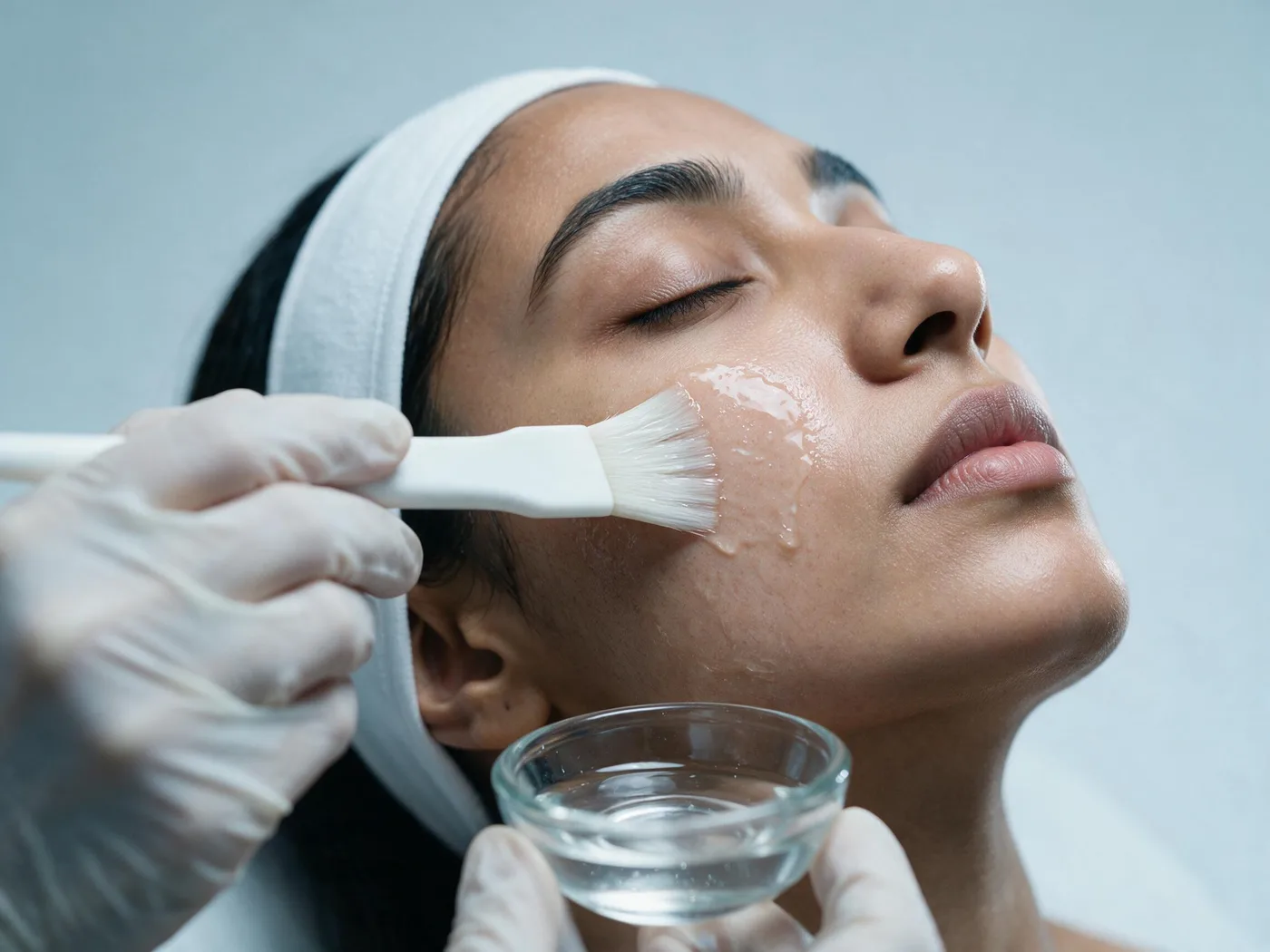
A chemical peel is a controlled exfoliation. A dermatologist applies an acid solution that loosens the dull top layer of skin, and fresher, more even skin comes through as it heals. How deep it works depends on the acid and its strength, which is why the same peel can suit one person and irritate another.
What a chemical peel treats
- Active acne and blackheads: salicylic acid peels clear oil from inside the pores and calm breakouts.
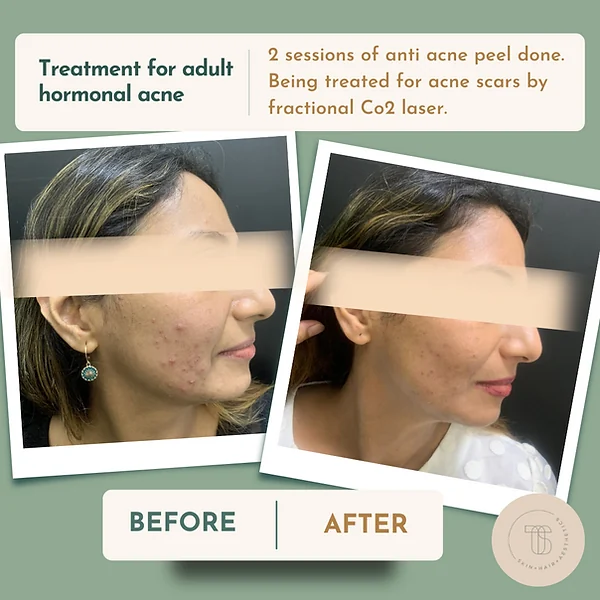
- Acne marks and dark spots: the brown marks pimples leave behind fade faster over a series of peels.
- Tan and uneven tone: peels lift sun-darkened skin and even out patchy colour.
- Dull, rough skin: a light peel smooths texture and brings back a fresh look.
- Mild melasma: only gentle peels, alongside sunscreen and prescription creams, because strong peels can make melasma darker.
- Shallow acne scars: medium-depth peels help, while deeper scars need acne scar treatment such as laser or subcision.
Types of chemical peels
| Peel | Best suited for | Typical downtime |
|---|---|---|
| Glycolic acid | Dull skin, tan, early pigmentation, fine lines | Little or none, light flaking for a day or two |
| Salicylic acid | Oily and acne-prone skin, blackheads, open pores | Mild dryness for a few days |
| TCA (medium depth) | Deeper pigmentation, rough texture, shallow scars | Visible peeling for about five to seven days |
Glycolic acid
- Best suited for
- Dull skin, tan, early pigmentation, fine lines
- Typical downtime
- Little or none, light flaking for a day or two
Salicylic acid
- Best suited for
- Oily and acne-prone skin, blackheads, open pores
- Typical downtime
- Mild dryness for a few days
TCA (medium depth)
- Best suited for
- Deeper pigmentation, rough texture, shallow scars
- Typical downtime
- Visible peeling for about five to seven days
What happens during a chemical peel
- Consultation: Dr. Sanjana checks your skin type, what you want treated and the products you already use.
- Preparation: skin that darkens easily is often prepared with sunscreen and a cream for about two weeks before the first peel, which lowers the risk of new marks.
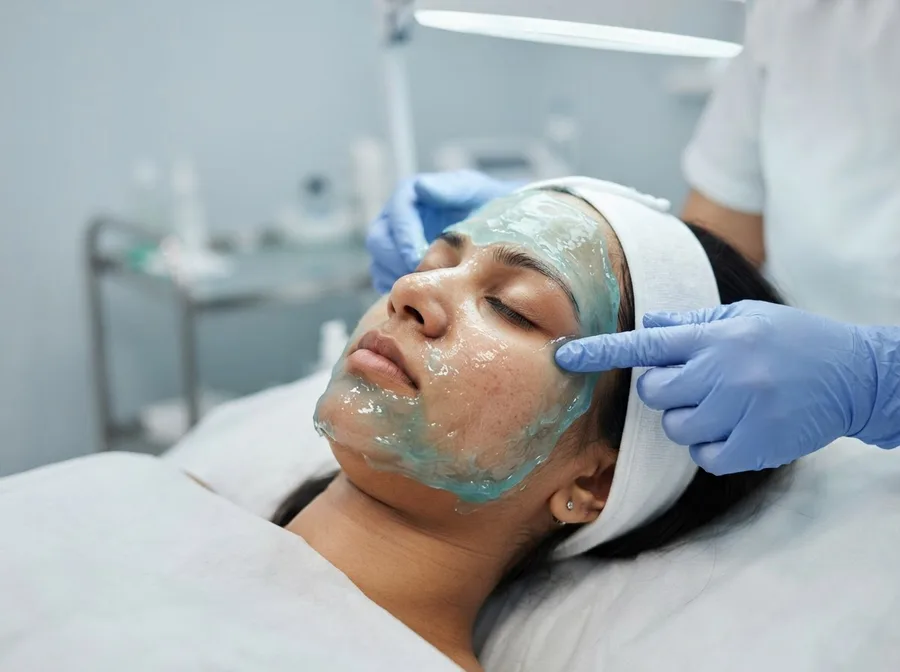
- The peel: the skin is cleansed, the peel is applied for a few minutes while you feel tingling or warmth, and then it is removed or neutralised.
- Aftercare: a soothing moisturiser and sunscreen go on before you leave, with clear instructions for the next few days.
How many peels you need
One light peel gives a fresher look for an event. For acne, marks, tan or pigmentation, most people need a series of four to six peels spaced two to four weeks apart, with daily sunscreen in between. Results build with each session.
Chemical peel in Indiranagar, planned around the sun
Peeled skin is more sensitive to the sun for a while. In Bangalore's bright summer months, peels are paired with strict sunscreen, and stronger peels are often planned for cooler, less sunny weeks. The schedule at the Indiranagar clinic is set around your plans and the season.
Chemical peel aftercare
- Wear sunscreen every day, and reapply when you are out in the sun.
- Let peeling skin come off on its own. Do not scrub or pick at it.
- Pause retinol, scrubs and other strong products for a few days, or as advised.
- Use a plain moisturiser if the skin feels tight.
- Avoid saunas, steam and long sun exposure for the first few days.
Chemical peel in Indiranagar: common questions
Most people feel tingling or warmth for a few minutes while the peel is on. Light peels are comfortable, while medium-depth peels sting more and are timed carefully.
Yes, when the peel and its strength suit your skin. Indian skin darkens more easily after irritation, so the skin is prepared first, strength is built up gradually and sunscreen is essential.
Skin looks fresher within a week of a light peel. Acne, marks and pigmentation improve over a series of peels, usually across two to three months.
Yes, if you plan ahead. Start the series two to three months before, and keep the last peel one to two weeks before the day, using a peel your skin has had before. See the bridal skin plan.
A chemical peel treats a specific problem such as acne, tan or pigmentation over a series. A Hydrafacial is a gentler cleanse and hydration with no peeling, better for an instant glow.
Yes, for surface pigmentation such as tan, sun spots and acne marks, over a series of peels. Melasma needs gentle peels only, because strong peels can make it darker. See pigmentation treatment.
It improves shallow scars and the marks around them. Deep pitted scars need acne scar treatment such as laser or subcision, and peels then help with the surface.
Yes. Salicylic acid peels are often used during active acne to clear the pores and calm breakouts, alongside prescription treatment.
It can make pores look smaller by clearing oil and smoothing the surface. It cannot close them permanently.
It depends on the peel and how many sessions you need. At Theory of Skin, Indiranagar, a skin consultation is ₹749, and the peel is quoted after your skin is examined.
Chemical peels are part of aesthetic dermatology at Theory of Skin. For stubborn dark patches, see pigmentation treatment, or read whether a peel or a laser suits acne scars.
Visit Theory of Skin
- Address
- 578, 9th A Main Rd, 1st Stage, Defence Colony, Indiranagar, Bengaluru, Karnataka 560038
- Phone
- +91 96862 37333
- Clinic hours
- Monday to Saturday, 11 AM to 7 PM
- Getting here
- Indiranagar Metro (Purple Line), 10-minute walk.