Acne scars: from home care to laser treatment.
Acne scars stick around because the skin doesn't heal perfectly after a breakout. Here is the ladder of options, from home care upwards.
Why acne scars stick around
Scars form when the skin doesn't heal perfectly after a breakout and lays down scar tissue instead. They fall into three groups: atrophic scars, which are depressed or sunken from tissue loss; hypertrophic scars, which are raised from excess tissue; and pigmented scars, the dark or red marks left by inflammation.
1. Topical treatments
The home-based tier. Retinoids (vitamin A derivatives) boost collagen, vitamin C serums brighten and alpha hydroxy acids exfoliate. Consistency is what makes this work. Use them daily and you'll see subtle improvement within a few weeks.
2. Chemical peels
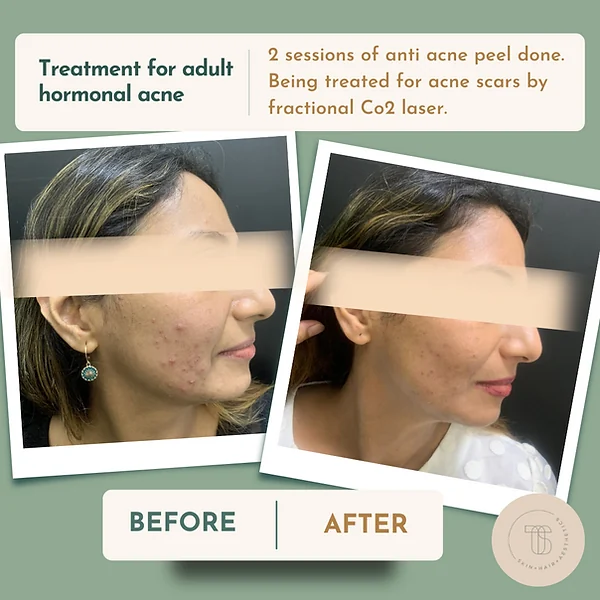
Superficial peels using glycolic acid are gentle with minimal downtime. Medium peels using TCA penetrate deeper but need recovery time. Multiple sessions spaced weeks apart produce meaningful improvement.
3. Microneedling
Controlled micro-injuries stimulate collagen and elastin production, filling depressed scars and smoothing texture with minimal downtime. This is often the first in-clinic step for moderate scarring.
4. Laser treatments
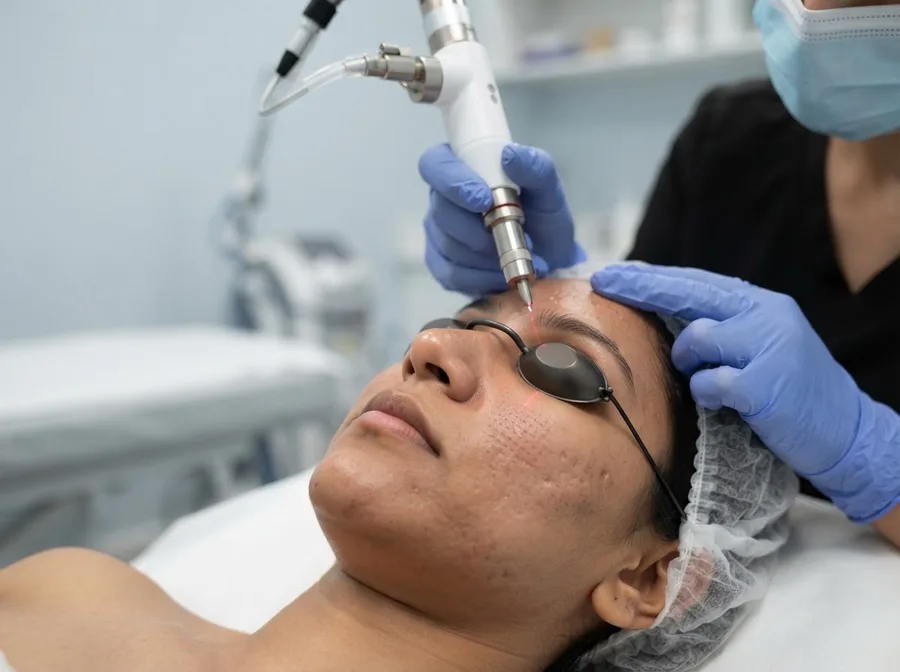
Fractional lasers create tiny wounds that stimulate healing across the treated area. Ablative lasers remove the top layer of skin outright and are kept for deeper scars. Both are part of laser treatments at Theory of Skin, after a skin assessment.
Lifestyle support
- Broad-spectrum sunscreen, daily.
- An antioxidant-rich diet with vitamins A, C and E.
- Adequate hydration.
- Never picking at acne or at healing scars.
Chemical peel or laser for acne scars: which suits you?
Peels work best on marks and shallow texture: the brown or red spots pimples leave behind, and fine, rough patches. They treat the surface, so deep pitted scars barely change with peels alone. Fractional CO2 laser and microneedling reach deeper and rebuild collagen under rolling, boxcar and ice pick scars. Many plans use both, peels for the marks and laser for the pits.
| Scar or mark | Usually responds to |
|---|---|
| Brown or red marks after pimples | Peels, laser toning, daily sunscreen |
| Shallow rolling scars | Microneedling, subcision, fractional laser |
| Boxcar scars | Fractional CO2 laser, TCA CROSS |
| Ice pick scars | TCA CROSS, then laser |
| Raised scars | Steroid injections, laser |
Brown or red marks after pimples
- Usually responds to
- Peels, laser toning, daily sunscreen
Shallow rolling scars
- Usually responds to
- Microneedling, subcision, fractional laser
Boxcar scars
- Usually responds to
- Fractional CO2 laser, TCA CROSS
Ice pick scars
- Usually responds to
- TCA CROSS, then laser
Raised scars
- Usually responds to
- Steroid injections, laser
Common questions
It fades marks and softens shallow texture, but it does not lift deep pitted scars on its own. For those, chemical peels are usually paired with microneedling, subcision or fractional laser.
Usually three to five, about four to six weeks apart, depending on scar depth and skin type. Expect a few days of redness and peeling after each session.
Active acne comes first. Treating scars while new pimples keep forming wastes sessions and irritates inflamed skin, so the plan starts with acne treatment and moves to scars once breakouts are under control.
For costs and session counts in Bangalore, read acne scar removal in Bangalore. If you want to know how far home care can go, see whether acne scars can be removed at home.