Acne scar removal in Bangalore: treatments that actually work.
Acne scar removal isn't a magic eraser, but modern dermatology gets close when the treatment is matched to the scar. Here is how the choice is actually made.
Your acne has finally settled, and now you are left with the scars. The honest news is that acne scar removal isn't a magic eraser, but modern dermatology gets close when each scar gets the right treatment.
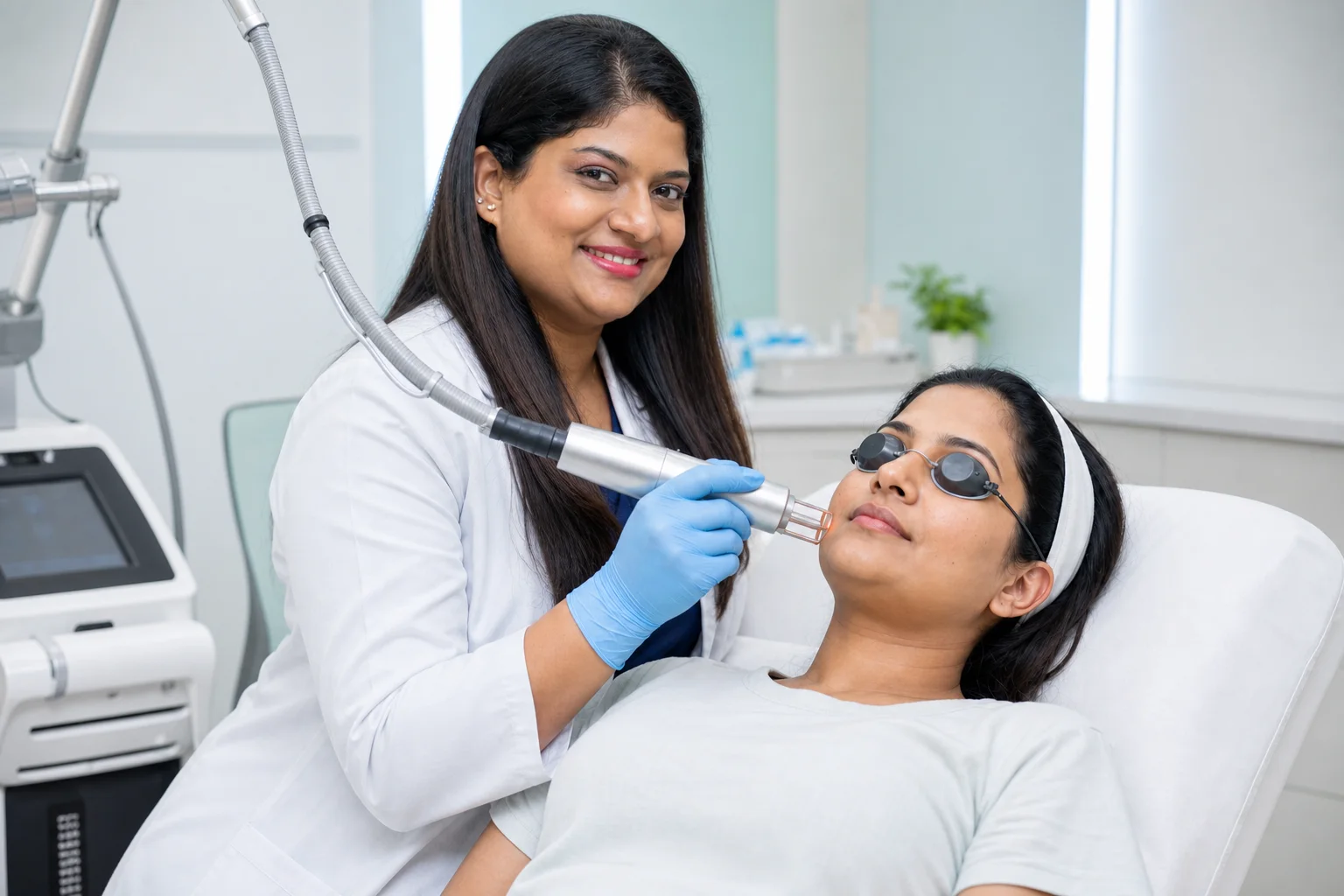
At Theory of Skin in Indiranagar, acne scar treatment is planned around Indian skin, where dark marks after a procedure are a real risk. Below is what each option does, how many sessions it takes and what it costs in Bangalore.
Understanding acne scars: why type matters
Not all acne scars are the same, and that's why your friend's laser treatment might not work for you. Your dermatologist needs to assess your scar mix before recommending anything, which is why we use dermoscopy and skin analysis to map scars first.
Atrophic scars (indented, most common)
- Ice pick scars: deep, narrow pits that extend into the dermis. Hardest to treat, but not impossible. Best treated with TCA CROSS, punch excision or CO2 laser.
- Boxcar scars: wider, U-shaped depressions with defined edges and moderate depth. Best treated with MNRF, fractional CO2 laser or subcision.
- Rolling scars: wave-like, undulating texture caused by fibrous bands pulling the skin down. Best treated with subcision, MNRF or dermal fillers.
Hypertrophic scars (raised, less common)
- Thick, raised scars sitting above skin level, more common on the chest and back.
- They result from excess collagen laid down during healing.
- Best treated with steroid injections, laser or silicone sheets.
Post-inflammatory hyperpigmentation (PIH)
- Flat dark spots. They are not true scars, but people often confuse the two.
- Extremely common in Indian skin (Fitzpatrick IV to VI).
- Easier to treat than textural scars: chemical peels, laser toning and topical lightening agents.
The treatments, and what each one is for
1. Fractional CO2 laser: the gold standard
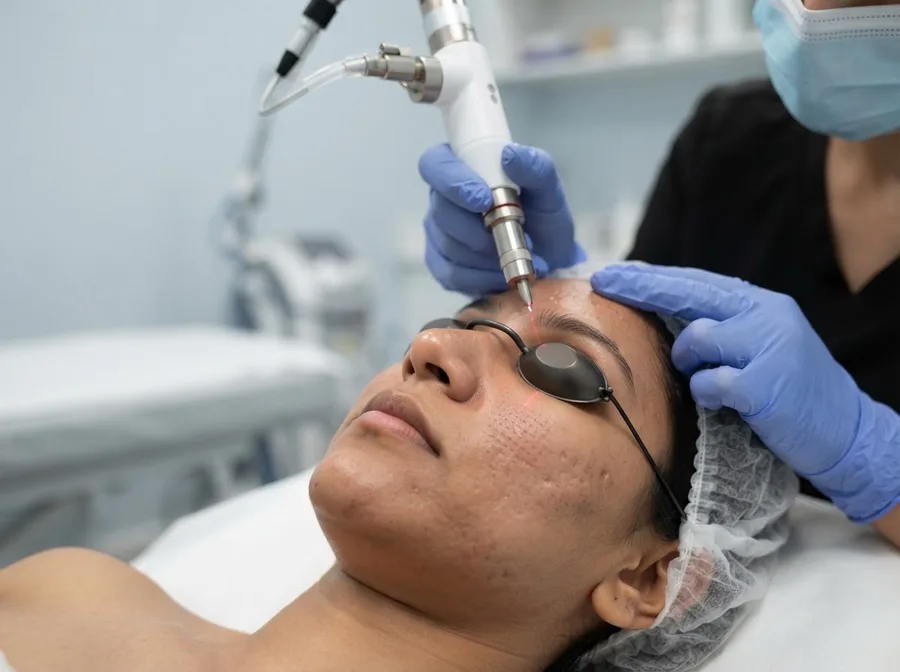
The strongest option for deep acne scars. A fractional CO2 laser creates thousands of microscopic columns of thermal damage to trigger collagen remodelling, ablating 20 to 30% of the surface per session and leaving the surrounding tissue intact so healing is faster.
- Best for: ice pick, boxcar and rolling scars, and severe scarring generally.
- Sessions: 4 to 6, spaced 4 weeks apart, 40 to 60 minutes each under topical numbing.
- Downtime: 5 to 7 days of redness and peeling, so plan for time away from events.
- Cost: ₹12,000 to 25,000 per session; ₹32,000 to 65,000 for a three-session package.
2. Microneedling radiofrequency (MNRF): safer for Indian skin
MNRF combines microneedling with radiofrequency energy to remodel scar tissue from within. Gold-plated microneedles penetrate to a set depth (0.5 to 3.5mm) and deliver RF that heats tissue to 60 to 65°C, triggering collagen remodelling with minimal surface damage.
- Best for: boxcar and rolling scars, and Fitzpatrick IV to V skin where PIH risk matters.
- Sessions: 4 to 6, spaced 4 to 6 weeks, 45 to 60 minutes each.
- Downtime: 1 to 2 days of mild redness and pinpoint marks.
- Cost: ₹8,000 to 15,000 per session; ₹28,000 to 52,000 for four.
3. TCA CROSS: for stubborn ice pick scars
A targeted technique where high-concentration TCA (70 to 100%) is applied directly into the base of the scar with a fine applicator. It triggers an intense localised healing response that builds collagen from the bottom up, gradually lifting the scar floor.
- Best for: ice pick scars. This is the treatment for them.
- Sessions: 3 to 5, spaced 4 to 6 weeks, 15 to 30 minutes, usually without anaesthetic.
- Downtime: minimal. Tiny scabs form and fall off within 5 to 7 days.
- Cost: ₹3,500 to 8,000 per session, depending on how many scars are treated.
4. Subcision: releasing tethered scars
A minor surgical technique. A Nokor or 18G needle is passed beneath the scar and moved back and forth to break the fibrous bands pulling the skin down, allowing it to lift and smooth. Often combined with filler immediately afterwards to hold the elevation.
- Best for: rolling scars, and tethered scars that haven't responded to lasers alone.
- Sessions: 1 to 3, spaced 4 to 8 weeks, 30 to 45 minutes under local anaesthetic.
- Downtime: 3 to 5 days; bruising is common and expected.
- Cost: ₹5,000 to 12,000 per session.
You'll see slight lifting immediately, then continued improvement over two to three months as collagen fills the released space. Rolling scars typically become 40 to 60% shallower.
5. Chemical peels: superficial to medium depth
Acid solutions that exfoliate damaged layers and stimulate new growth. Glycolic acid (20 to 70%) suits mild scarring and PIH; salicylic acid (20 to 30%) suits oily, acne-prone skin because it penetrates sebaceous follicles; TCA (15 to 35%) goes deeper for moderate scarring but brings three to five days of peeling.
- Superficial peels: ₹2,500 to 5,000 per session.
- Medium-depth peels: ₹5,000 to 10,000 per session.
- Packages: ₹12,000 to 48,000 for four to six sessions.
We often run a monthly maintenance peel after a laser or MNRF protocol finishes, to keep skin smooth and head off new pigmentation.
Combination therapy: how a plan is actually sequenced
Acne scar removal isn't one-size-fits-all. The best results usually come from combining treatments. Here is a typical six-month plan, which is adjusted for each patient:
- Month 1: MNRF session one, for overall collagen stimulation.
- Month 2: TCA CROSS for deep ice pick scars, plus subcision for rolling scars.
- Month 3: MNRF session two.
- Month 4: Fractional CO2 laser as the targeted, aggressive step.
- Month 5: MNRF session three plus a maintenance chemical peel.
- Month 6: Final assessment, and touch-up TCA CROSS if needed.
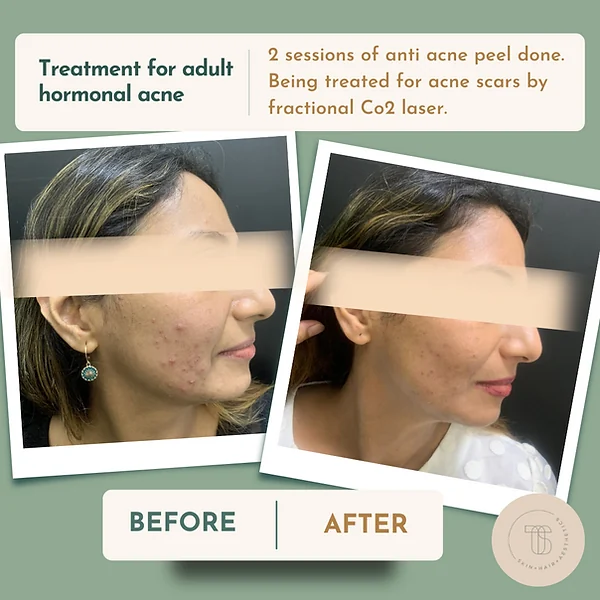
Expect 60 to 80% improvement in scar appearance: smoother texture, reduced depth, more even tone. Investment for a comprehensive protocol runs ₹45,000 to 85,000 depending on severity.
What Bangalore specifically changes
Bangalore's moderate climate is good for healing: no Delhi heat, no Mumbai humidity. But monsoon (June to September) raises infection risk, so treatment intensity may be adjusted in those months, and city pollution can aggravate healing skin, which is why post-treatment protocols include vitamin C and E antioxidant serums.
The bigger factor is skin type. Fitzpatrick IV to VI skin has higher melanocyte activity, so aggressive treatment can trigger post-inflammatory hyperpigmentation if done carelessly. Our safety protocol pre-treats with tyrosinase inhibitors such as kojic and tranexamic acid for two weeks, starts on conservative laser settings, and monitors for early PIH at follow-up.
Acne scar treatment cost in Bangalore
| Treatment | Per session | Sessions | Total |
|---|---|---|---|
| Fractional CO2 laser | ₹12,000 to 25,000 | 4 to 6 | ₹36,000 to 1,25,000 |
| MNRF | ₹8,000 to 15,000 | 4 to 6 | ₹24,000 to 60,000 |
| TCA CROSS | ₹3,500 to 8,000 | 2 to 4 | ₹10,500 to 40,000 |
| Subcision | ₹5,000 to 12,000 | 1 to 3 | ₹5,000 to 36,000 |
| Chemical peels | ₹2,500 to 10,000 | 4 to 6 | ₹12,000 to 48,000 |
| Combination package | Varies | 6 to 12 months | ₹45,000 to 1,20,000 |
Fractional CO2 laser
- Per session
- ₹12,000 to 25,000
- Sessions
- 4 to 6
- Total
- ₹36,000 to 1,25,000
MNRF
- Per session
- ₹8,000 to 15,000
- Sessions
- 4 to 6
- Total
- ₹24,000 to 60,000
TCA CROSS
- Per session
- ₹3,500 to 8,000
- Sessions
- 2 to 4
- Total
- ₹10,500 to 40,000
Subcision
- Per session
- ₹5,000 to 12,000
- Sessions
- 1 to 3
- Total
- ₹5,000 to 36,000
Chemical peels
- Per session
- ₹2,500 to 10,000
- Sessions
- 4 to 6
- Total
- ₹12,000 to 48,000
Combination package
- Per session
- Varies
- Sessions
- 6 to 12 months
- Total
- ₹45,000 to 1,20,000
Before and after: getting this right
Before treatment: clear active acne first, avoid sun exposure for two weeks, start daily SPF 50+ if you aren't already, and disclose any keloid history or skin condition.
- No sun exposure for a minimum of five days afterwards. This one is non-negotiable.
- Gentle, fragrance-free cleanser only, and the prescribed healing ointment.
- No makeup for 48 to 72 hours; then mineral-based, non-comedogenic only.
- No gym, swimming or sauna for five to seven days.
- Sleep with your head elevated for two to three nights to reduce swelling.
- Don't touch or pick at treated skin. That's how infections start.
Common questions
It depends on severity: mild scarring takes three to four sessions, moderate scarring five to six, and severe scarring eight to twelve over 12 to 18 months.
Yes, when a trained dermatologist uses the right settings. Dr. Sanjana Shivashankar treats Fitzpatrick IV to VI skin with protocols built specifically around PIH risk.
Honest answer: probably not 100%. Realistic expectation is 60 to 85% improvement. The goal is smoother texture and less noticeable scarring, and most patients are happy with that even when minor marks remain.
Initial improvement at four to six weeks. Maximum results at three to six months, because collagen takes that long to rebuild.
With proper numbing, discomfort during treatment is minimal. Afterwards it feels like mild sunburn, and prescribed pain relief handles it if needed.
MNRF and chemical peels, yes, with strict sun protection. For CO2 laser we prefer cooler months (October to February) to minimise PIH risk, though it is possible year-round if you are genuinely diligent about sun avoidance.
We treat it. Active acne control runs in parallel with scar treatment, using topicals, oral medication or maintenance peels as needed.
What to expect at your consultation
- Detailed skin analysis and scar classification.
- Dermoscopy examination.
- Photography, so progress is measured rather than remembered.
- A customised treatment protocol and a transparent cost estimate.
- A no-pressure discussion. We would rather you made an informed decision.
If you want your scars assessed properly, see acne scar treatment at the Indiranagar clinic or book a skin consultation. For a simpler overview of home care versus clinic treatment, read acne scar remedies that work. Comparing clinics first? Here is how to choose a skin clinic in Bangalore.