Acne scar treatment: types of scars, what works and how long it takes.
Acne scar treatment gives the clearest results when it is matched to the type of scar. Icepick, boxcar and rolling scars sit at different depths and respond to different treatments, and flat red or brown marks are not scars at all. This guide explains them the way Dr. Sanjana Shivashankar does in consultation at Theory of Skin, Indiranagar.
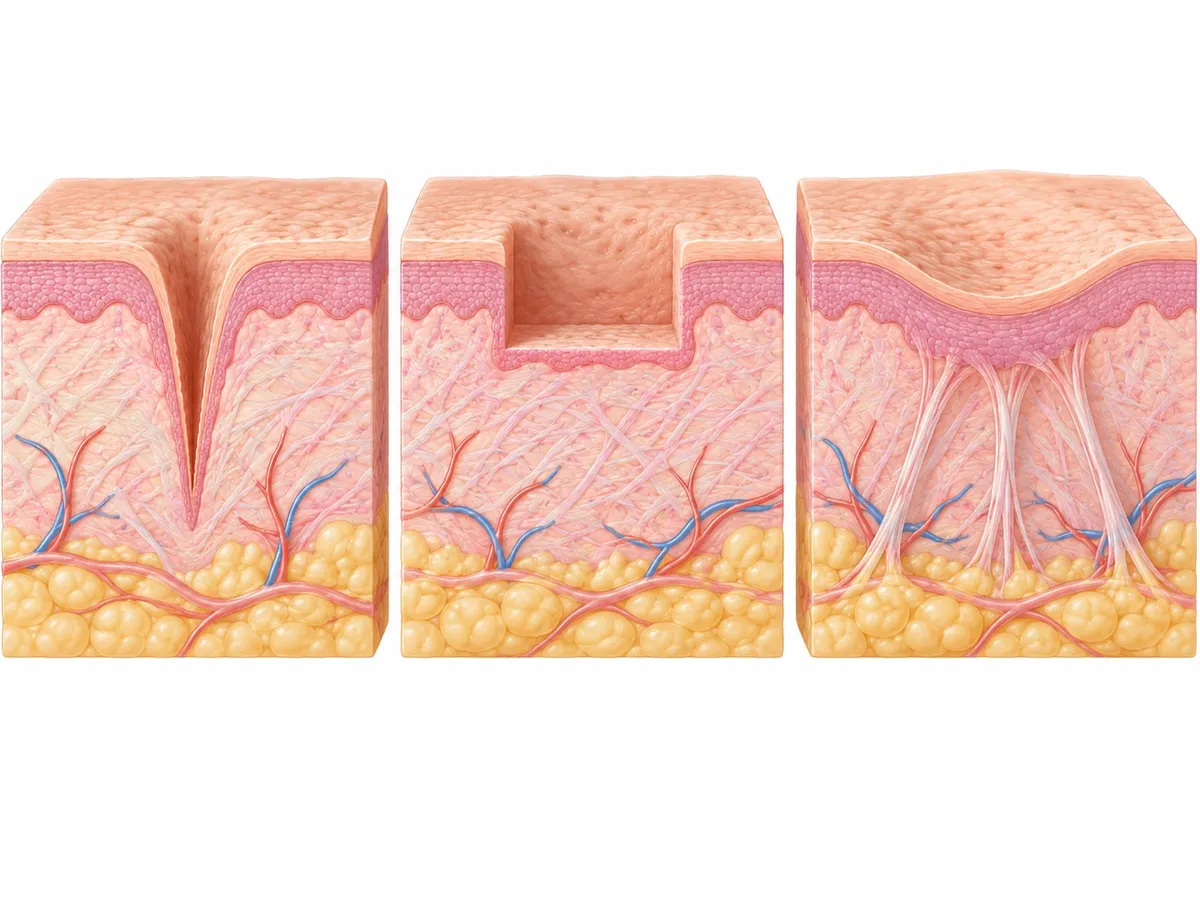
First, is it a mark or a scar?
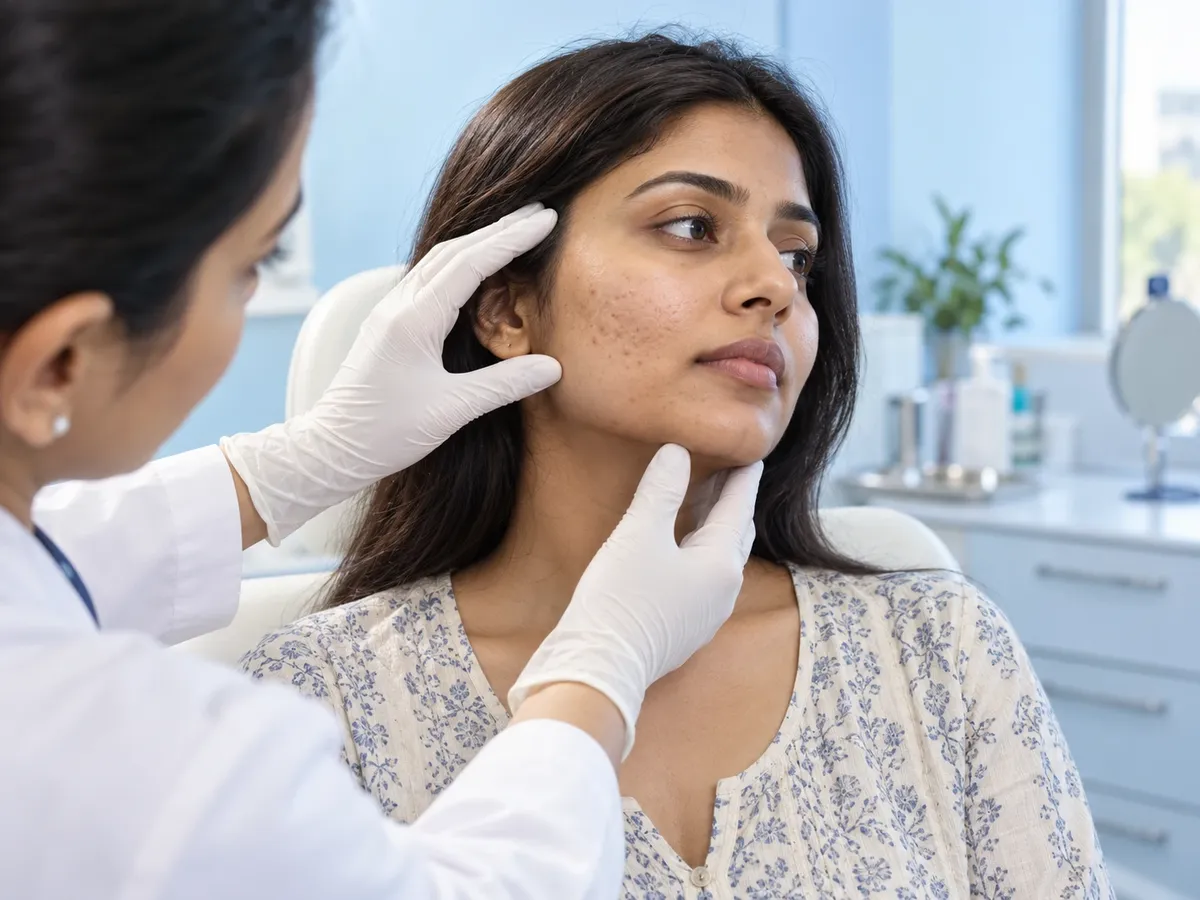
Most people who ask about acne scars are looking at two different things. Marks are changes in colour left behind after a pimple heals. Scars are changes in the skin's surface, where collagen was lost or overbuilt. The difference decides the whole plan, so it is worth checking before anything else.
| Acne marks | Acne scars | |
|---|---|---|
| What you see | Flat brown, red or purple spots | Pits, dents, wide depressions or raised bumps |
| Feels | Smooth, same level as the skin | Uneven: dips below or rises above the skin |
| Medical name | Post-inflammatory hyperpigmentation (brown) or erythema (red) | Atrophic scars (pitted) or hypertrophic and keloid scars (raised) |
| Fades on its own? | Usually, over 6 to 12 months, sometimes longer | No |
| What helps | Sunscreen, creams, peels, laser toning. See dark spot removal | Clinic procedures: laser, subcision, TCA CROSS, peels, fillers |
What you see
- Acne marks
- Flat brown, red or purple spots
- Acne scars
- Pits, dents, wide depressions or raised bumps
Feels
- Acne marks
- Smooth, same level as the skin
- Acne scars
- Uneven: dips below or rises above the skin
Medical name
- Acne marks
- Post-inflammatory hyperpigmentation (brown) or erythema (red)
- Acne scars
- Atrophic scars (pitted) or hypertrophic and keloid scars (raised)
Fades on its own?
- Acne marks
- Usually, over 6 to 12 months, sometimes longer
- Acne scars
- No
What helps
- Acne marks
- Sunscreen, creams, peels, laser toning. See dark spot removal
- Acne scars
- Clinic procedures: laser, subcision, TCA CROSS, peels, fillers
Brown marks are especially common in Indian skin, because darker skin reacts to inflammation by making more pigment (DermNet). They are frustrating, but they are not permanent. Daily sunscreen is the single most useful step, because sun exposure darkens marks and slows their fading (AAD).
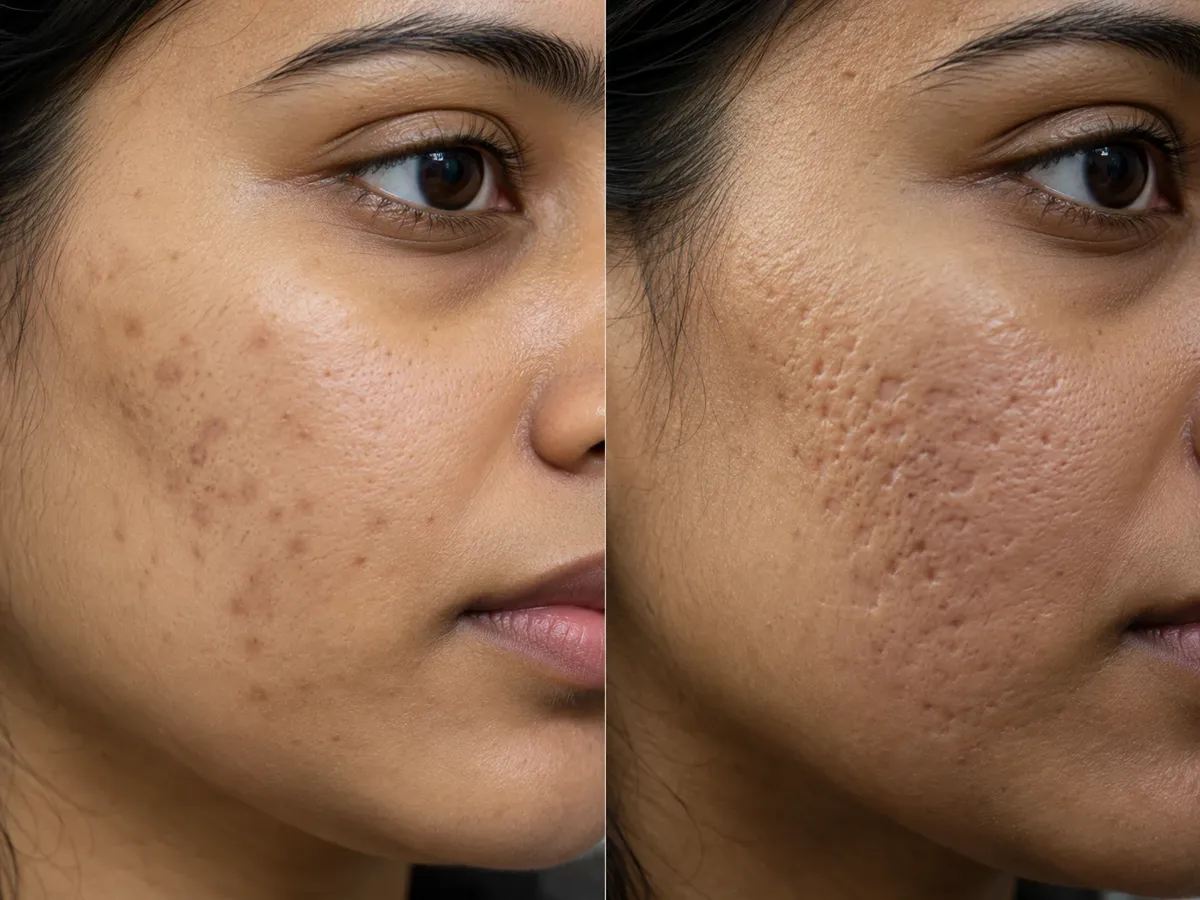
Why acne leaves scars
A deep, inflamed pimple damages the skin around it. As the skin repairs itself, it either makes too little collagen, which leaves a pit, or too much, which leaves a raised scar. Scars are more likely when acne is severe, when it goes untreated for a long time, when spots are squeezed or picked, and when there is a family history of scarring (AAD).
The five types of acne scars
Dermatologists group acne scars by shape and depth. The most widely used system describes three types of pitted, or atrophic, scars, plus raised scars (Jacob and others, 2001). Most faces have a mix, which is why combination treatment is common.
- Icepick scars: narrow, deep holes, under 2 mm wide, that look like large open pores. They are the most common type, about 60 to 70% of atrophic scars, and the hardest to reach because they go deep.
- Boxcar scars: round or oval depressions with sharp, steep edges, like a chickenpox scar. Shallow boxcar scars respond well to laser and peels; deep ones may need more.
- Rolling scars: wide, gentle dips that give the skin a wavy, uneven look, especially in side light. Bands of scar tissue pull the skin down from below.
- Hypertrophic scars: raised, firm scars that stay within the area of the original spot. More common on the jawline, chest and back.
- Keloid scars: raised scars that grow beyond the original spot. More likely in darker skin and on the chest, shoulders and jawline.
Which acne scar treatment suits which scar
No single treatment works on every scar. The table shows how dermatologists usually match treatment to type (Fabbrocini and others, 2010). In practice, a plan often combines two or three of them across a few months.
| Scar type | Treatments that usually help | Why |
|---|---|---|
| Icepick | TCA CROSS, punch excision, then fractional laser | Treats the deep, narrow shaft that surface treatments cannot reach |
| Boxcar (shallow) | Fractional CO2 laser, chemical peels, microneedling | Smooths the sharp edges and builds new collagen |
| Boxcar (deep) | Punch elevation or excision, then fractional laser | Lifts or replaces the base of the scar before resurfacing |
| Rolling | Subcision, fillers, microneedling with radiofrequency | Releases the bands pulling the skin down, then restores volume |
| Hypertrophic and keloid | Steroid injections, silicone gel, laser | Flattens and softens the extra scar tissue |
| Marks (not scars) | Sunscreen, creams, peels, laser toning | Fades pigment and redness |
Icepick
- Treatments that usually help
- TCA CROSS, punch excision, then fractional laser
- Why
- Treats the deep, narrow shaft that surface treatments cannot reach
Boxcar (shallow)
- Treatments that usually help
- Fractional CO2 laser, chemical peels, microneedling
- Why
- Smooths the sharp edges and builds new collagen
Boxcar (deep)
- Treatments that usually help
- Punch elevation or excision, then fractional laser
- Why
- Lifts or replaces the base of the scar before resurfacing
Rolling
- Treatments that usually help
- Subcision, fillers, microneedling with radiofrequency
- Why
- Releases the bands pulling the skin down, then restores volume
Hypertrophic and keloid
- Treatments that usually help
- Steroid injections, silicone gel, laser
- Why
- Flattens and softens the extra scar tissue
Marks (not scars)
- Treatments that usually help
- Sunscreen, creams, peels, laser toning
- Why
- Fades pigment and redness
Acne scar treatments, one by one
Fractional CO2 laser
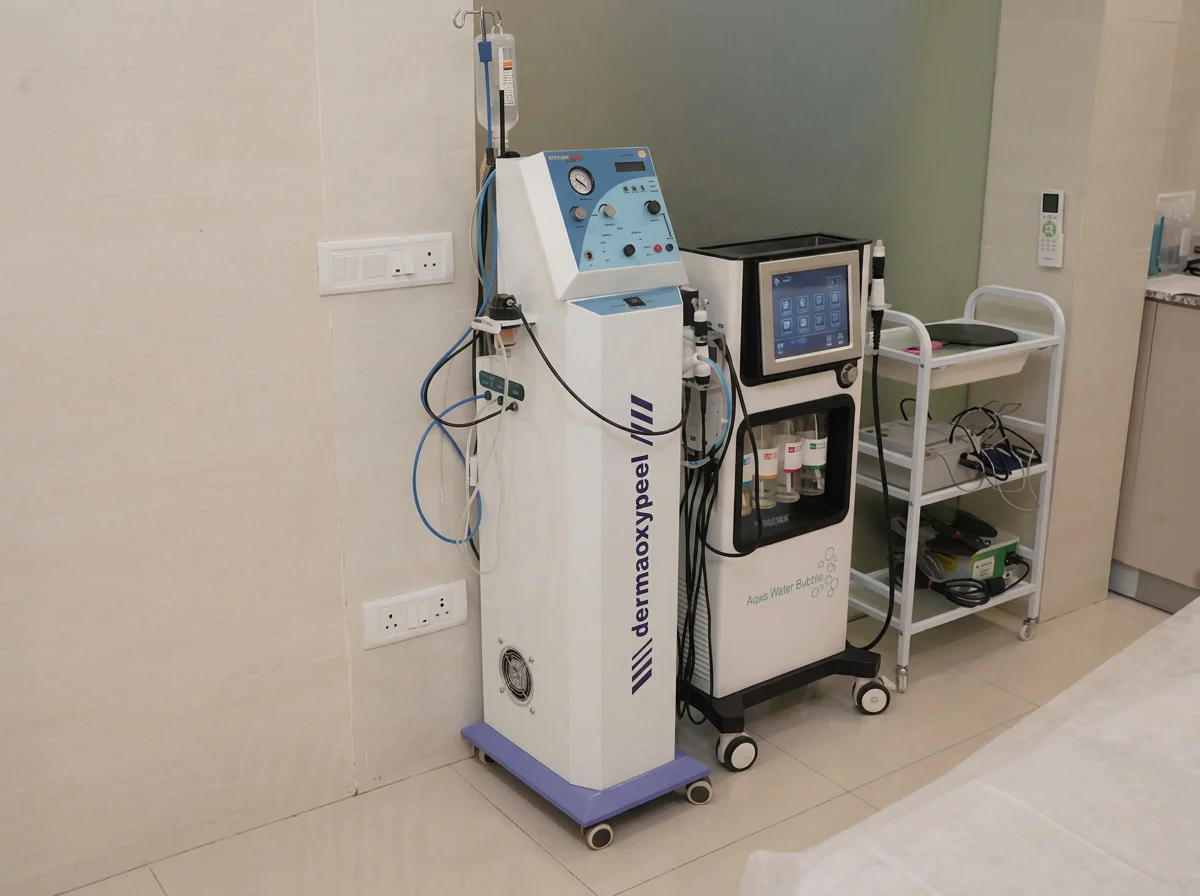
Fractional CO2 laser makes tiny columns of controlled injury in the skin, with healthy skin left in between. As the skin heals, it builds new collagen, which gradually lifts and smooths boxcar and shallow rolling scars (AAD). It is one of the most studied treatments for acne scars. Expect redness, a sunburn-like feeling and fine flaking for about five to seven days after each session. Read more about fractional CO2 laser for acne scars at the clinic.
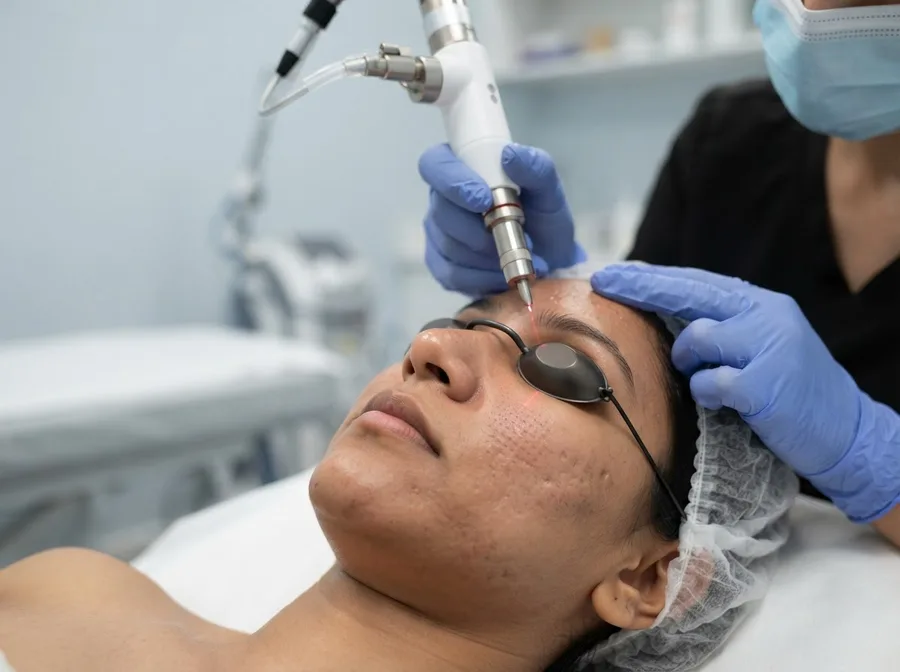
Chemical peels
Medical-grade peels remove the top layers of skin in a controlled way. Superficial and medium peels help shallow scars, uneven texture and the brown marks that often sit alongside scars. On Indian skin the peel and its strength are chosen carefully to avoid new pigmentation. See chemical peels at Theory of Skin.
TCA CROSS
A high-strength acid is placed precisely into the base of each icepick scar with a fine applicator. Over the following weeks the scar shaft fills with new collagen. It is quick, targets one scar at a time and usually needs repeat sessions a few weeks apart.
Subcision
For rolling scars, a fine needle is passed under the skin to cut the fibrous bands that tie the scar down. Once released, the skin rises, and the space fills with new collagen as it heals. Bruising for a week or so is normal. It pairs well with laser or microneedling.
Microneedling and microneedling with radiofrequency
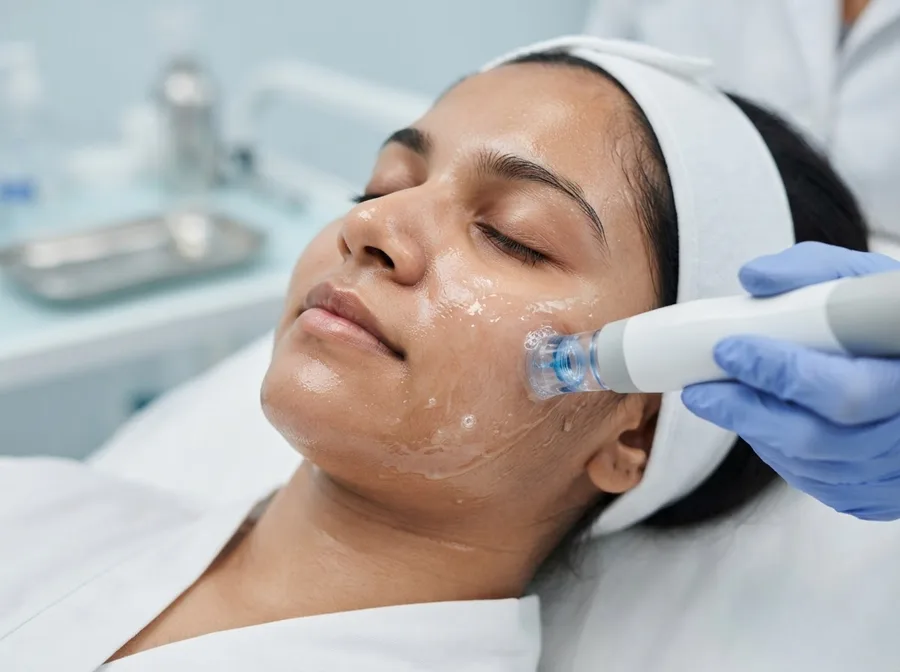
Fine needles create micro-channels that trigger collagen. Adding radiofrequency heat deepens the effect. It suits rolling and shallow boxcar scars and has little downtime, though results build more slowly than with fractional laser. Home dermarollers are not the same: they do not reach the right depth and can cause infection and pigmentation.
Fillers
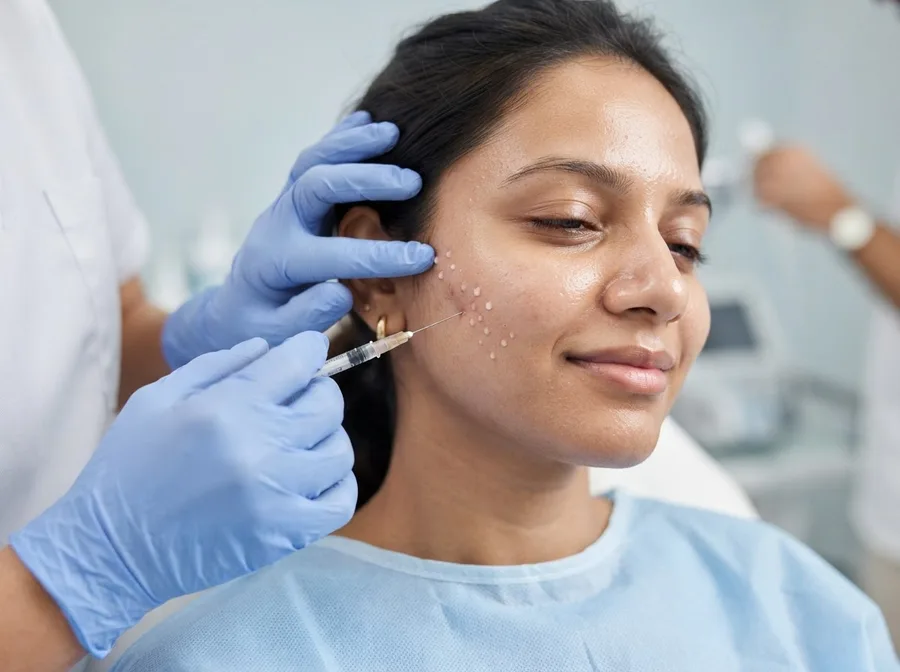
Hyaluronic acid fillers placed under a rolling or soft depressed scar lift it to the level of the surrounding skin straight away. The effect is temporary, so fillers are often used alongside collagen-building treatments. See aesthetic treatments at the clinic.
Punch excision and scar revision
A deep icepick or boxcar scar can be removed with a small round punch and the edges closed, leaving a fine line that blends better than the pit. This is minor surgery under local anaesthetic, done by a dermatosurgeon. See dermatosurgery and scar revision.
“Acne scars rarely respond to one treatment alone. The plan that works is the one built around your scar types, your skin tone and the downtime you can take.”
Acne scar treatment for Indian skin
Indian skin heals well, but it reacts to heat and inflammation by making pigment. That means post-inflammatory hyperpigmentation after a laser or peel is the main risk to plan around. A careful dermatologist reduces it in four ways:
- Preparing the skin: two to four weeks of creams that calm pigment before laser or a stronger peel.
- Choosing the settings: lower density and longer gaps between sessions, rather than one aggressive session.
- Strict sun protection: broad-spectrum sunscreen every day before and after treatment, reapplied outdoors.
- Treating any darkening early: if marks appear after a session, they are treated straight away and usually settle.
How many sessions, and how long until you see results?
Collagen takes time to rebuild. Most people notice smoother skin from about four to six weeks after a session, and the improvement continues for three to six months. That is why sessions are spaced weeks apart and why progress photos taken in the same light are the fairest way to judge results.
| Treatment | Usual number of sessions | Gap between sessions | Downtime |
|---|---|---|---|
| Fractional CO2 laser | 3 to 5 | 4 to 6 weeks | About 5 to 7 days of redness and flaking |
| Chemical peels | 4 to 6 | 2 to 4 weeks | A few days of peeling |
| TCA CROSS | 2 to 4 | 4 to 6 weeks | Small scabs for about a week |
| Subcision | 1 to 3 | 4 to 8 weeks | Bruising for about a week |
| Microneedling with radiofrequency | 3 to 6 | 4 weeks | 1 to 3 days of redness |
| Fillers | 1, topped up later | As needed | Minimal |
Fractional CO2 laser
- Usual number of sessions
- 3 to 5
- Gap between sessions
- 4 to 6 weeks
- Downtime
- About 5 to 7 days of redness and flaking
Chemical peels
- Usual number of sessions
- 4 to 6
- Gap between sessions
- 2 to 4 weeks
- Downtime
- A few days of peeling
TCA CROSS
- Usual number of sessions
- 2 to 4
- Gap between sessions
- 4 to 6 weeks
- Downtime
- Small scabs for about a week
Subcision
- Usual number of sessions
- 1 to 3
- Gap between sessions
- 4 to 8 weeks
- Downtime
- Bruising for about a week
Microneedling with radiofrequency
- Usual number of sessions
- 3 to 6
- Gap between sessions
- 4 weeks
- Downtime
- 1 to 3 days of redness
Fillers
- Usual number of sessions
- 1, topped up later
- Gap between sessions
- As needed
- Downtime
- Minimal
What does acne scar treatment cost?
Cost depends on the treatments in your plan, how many sessions you need and the size of the area. A plan for a few shallow scars costs far less than a combination plan for deep scars across both cheeks. For typical ranges in Bangalore, read acne scar removal cost in Bangalore. At the clinic, the full plan and its cost are explained before you start.
Can acne scars be removed at home?
Pitted scars cannot be removed at home. No cream, serum or home remedy rebuilds the collagen lost in a scar. What home care can do is fade marks, keep acne under control and protect the results of treatment:
- Sunscreen every day: SPF 30 or higher, broad-spectrum, even indoors near windows.
- A retinoid at night: helps marks fade and prevents new acne, when prescribed at the right strength.
- Do not pick or squeeze: every squeezed spot is a new chance of a scar.
- Skip DIY needling and strong acids: these cause burns and pigmentation on Indian skin far more often than they help.
For a longer look at what works at home and what does not, read acne scar remedies that work.
Aftercare after an acne scar procedure
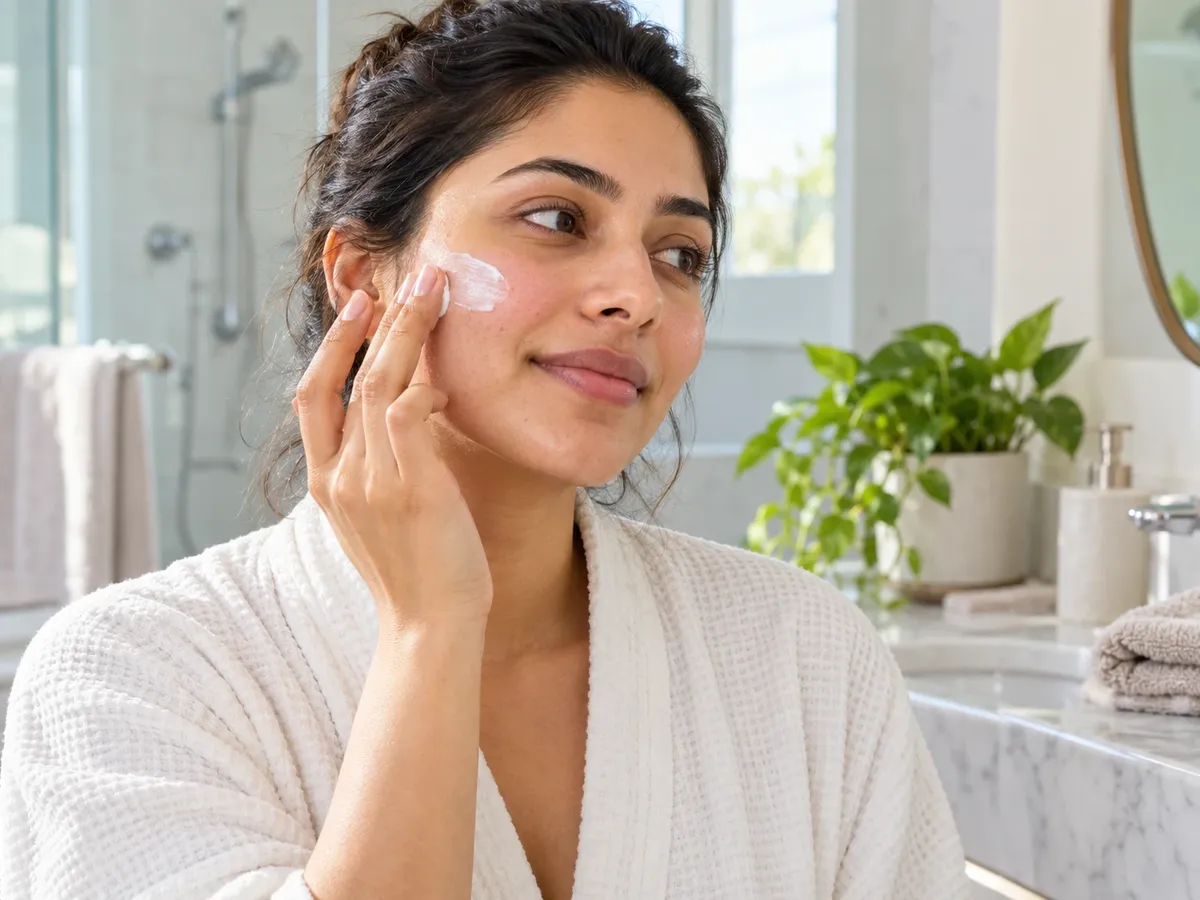
- Wash with a mild cleanser and lukewarm water; pat dry.
- Use the moisturiser or healing cream you are given, as often as advised.
- Stay out of direct sun and use sunscreen once the skin is no longer raw.
- Do not pick flakes or scabs; let them come off on their own.
- Pause retinoids, acids and scrubs until the doctor says to restart.
- Avoid swimming, saunas and heavy workouts for a few days.
- Call the clinic if you notice increasing pain, swelling, pus or fever.
When to see a dermatologist for acne scars
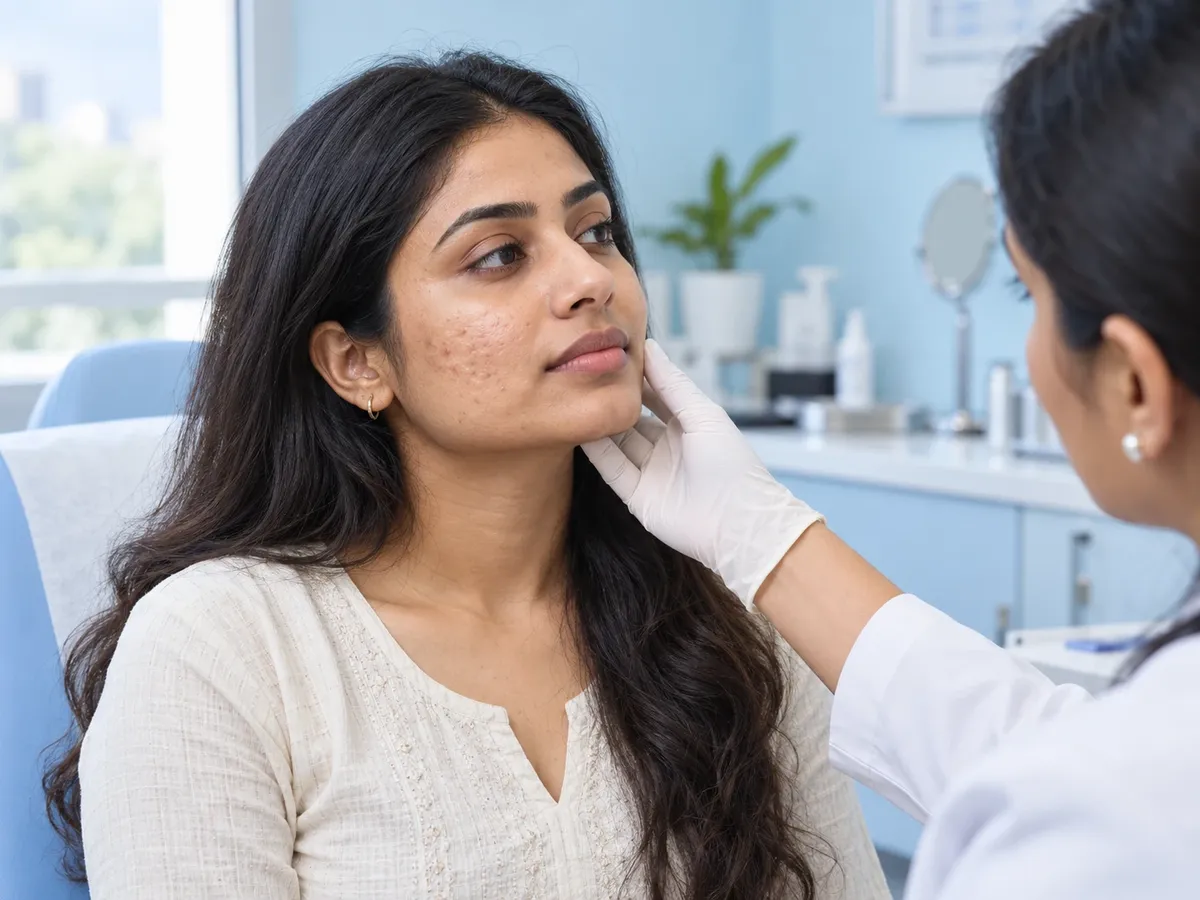
See a dermatologist if you have pitted or raised scars, if acne is still leaving new marks, or if you are unsure whether you are looking at marks or scars. A consultation includes an examination of your skin in good light, a note of your scar types and skin tone, and a plan with the number of sessions and the expected downtime. At Theory of Skin, every plan is made by Dr. Sanjana Shivashankar, MD Dermatology, at the clinic in Indiranagar, a 10 minute walk from Indiranagar Metro.
Common questions
Rarely. Treatment makes scars much less noticeable, often to the point where they are hard to see in normal light, but deep scars usually improve rather than vanish. Anyone promising complete removal is overselling.
It depends on the type. Icepick scars respond to TCA CROSS, rolling scars to subcision and fillers, and boxcar scars to fractional laser and peels. Most faces have more than one type, so a combination plan is common. A dermatologist decides after examining your skin.
Usually three to five sessions of fractional CO2 laser, four to six weeks apart, sometimes combined with other treatments. Results keep improving for three to six months after each session.
Yes, when the settings are chosen for darker skin and the skin is prepared beforehand. The main risk is temporary darkening, which careful settings, sunscreen and early treatment keep under control.
Flat brown or red marks usually fade over 6 to 12 months, sometimes longer, especially with daily sunscreen. Pitted scars do not fade on their own. Peels and creams can speed up the fading of marks.
It is usually better to control active acne first. New breakouts keep making new scars, and some procedures can flare acne. Mild scars and marks can sometimes be treated alongside acne treatment.
Numbing cream is applied before laser, microneedling and subcision, so most people describe a warm, prickling feeling rather than pain. Mild soreness and redness afterwards are normal.
Most people notice a change from about four to six weeks after a session, as new collagen forms. The full result of a course shows three to six months after the last session.
Related reading: acne scar removal cost in Bangalore, acne scar remedies that work, and acne scar treatment at the Indiranagar clinic. Sources: American Academy of Dermatology, DermNet, NHS, and the studies linked above.